
Concrete Base
The traditional, proven foundation for heavier garden buildings on flat, accessible ground — a solid, permanent slab that won't move, built to take serious weight for decades.
Flat, level ground
Garages, workshops & large garden rooms
Heavy or permanent buildings
A hard floor you can use as-is
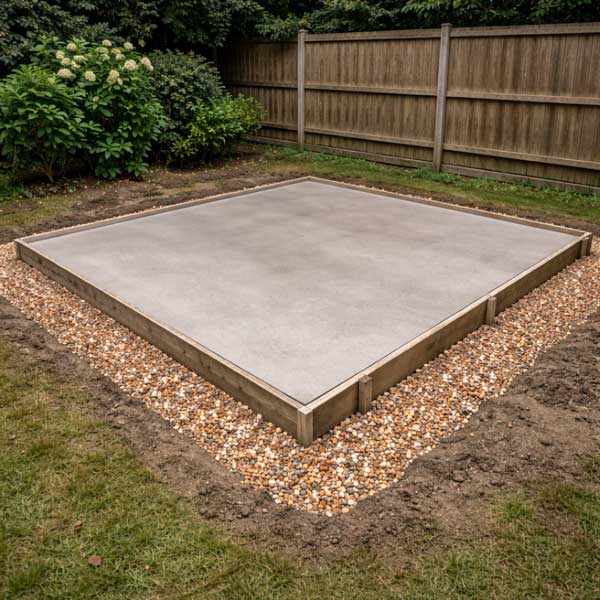
When concrete is the right foundation
Concrete isn't the fastest or the cleanest base to lay — but for the right building on the right ground, nothing beats a solid slab that simply never moves. Here's where it earns its place.
Heavy and large buildings
If you're planning a large garden room, a masonry or brick outbuilding, a garage, or a workshop packed with equipment — a concrete foundation can deal with excessive weight without any risk of movement. A reinforced concrete slab is built for exactly this: it carries heavy, concentrated loads with ease, gives you a solid surface to anchor and bolt the building down to, and won't flex or settle no matter what sits on top. When the building is large and the loads are big, a properly built slab is hard to beat.
Built to last
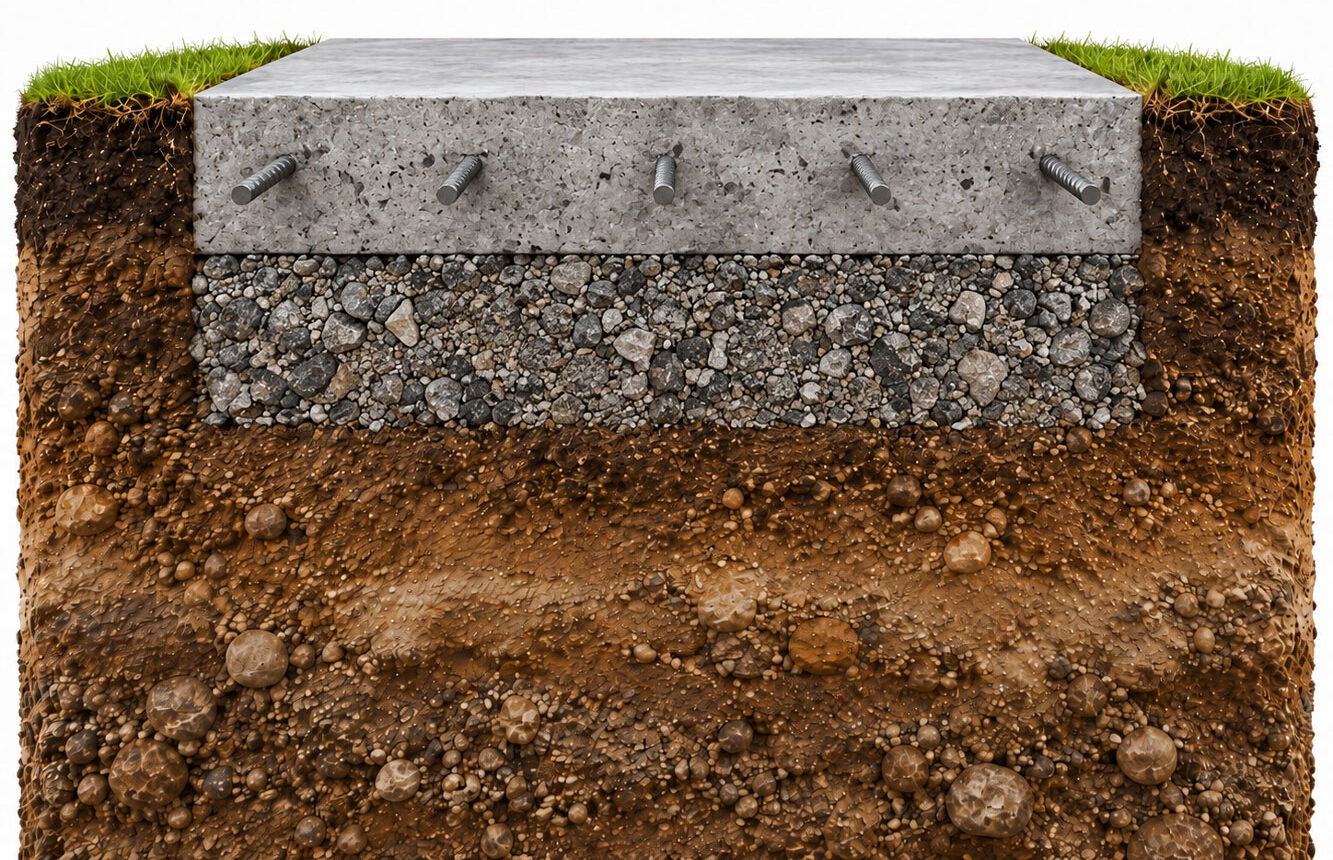
A concrete base is as permanent as foundations get. Once it's laid and cured, it simply doesn't move — no seasonal shifting, no working loose, no maintenance. With a compacted sub-base, a damp-proof membrane, and reinforcement through the slab, it's engineered to stay solid and crack-free for decades, shrugging off heavy use and hard weather alike. For a building you're treating as a permanent part of your home, it's a foundation you can lay once and forget about.
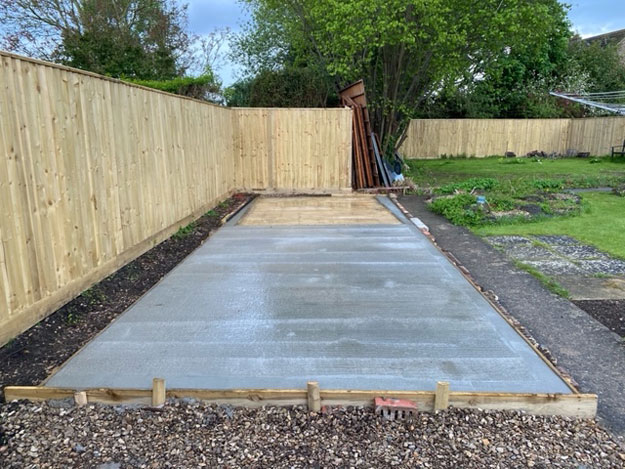
View our some of our installations
How a concrete base works
A concrete base is more than just poured concrete — the strength and longevity come from what goes underneath and inside it. We prepare the ground properly so the slab stays solid and crack-free for the long term.
When a concrete base isn't the right solution
We install all four base types, so we'll always steer you to the one that genuinely suits your project. A concrete base is a superb foundation on the right site — but we'd point you elsewhere if:
Your ground slopes or is uneven
Levelling for concrete means digging out and building up, which gets expensive fast. A ground screw base adjusts to the slope with no excavation → Ground Screw Base
Access is tight
If a mixer, barrows, or a muck-away lorry can't easily reach the spot, concrete becomes difficult and messy. Ground screws go in with compact equipment through the narrowest side passage → Ground Screw Base
You want it done fast, with no mess
Concrete needs groundwork, a pour, and curing time before your building can go on. If speed and a tidy garden matter most, ground screws are usually installed — and built on — in a day → Ground Screw Base
It's a lightweight building on flat ground and budget is tight
An eco-plastic grid may do the job for less → Eco-Plastic Base
You're placing onto an existing patio or slab
Adjustable feet are quicker and cheaper than laying new concrete. → Adjustable Feet
Concrete Base FAQs
If we haven't managed to answer your questions here, please contact us with your enquiry or request a quote and we'll send you an estimated price in 60 seconds.
Longer than a screw base — the groundwork and pour take time, and the concrete then needs to cure before your building can be sited on it. We'll give you a clear timeline when we quote. We normally recommend allowing 7 days for the concrete to completely cure.
We advise that a 100mm thick concrete base is suitable for a standard shed, with thicker slabs for heavier garden rooms, garages and workshops. We spec the thickness to your specific building and how you'll use it.
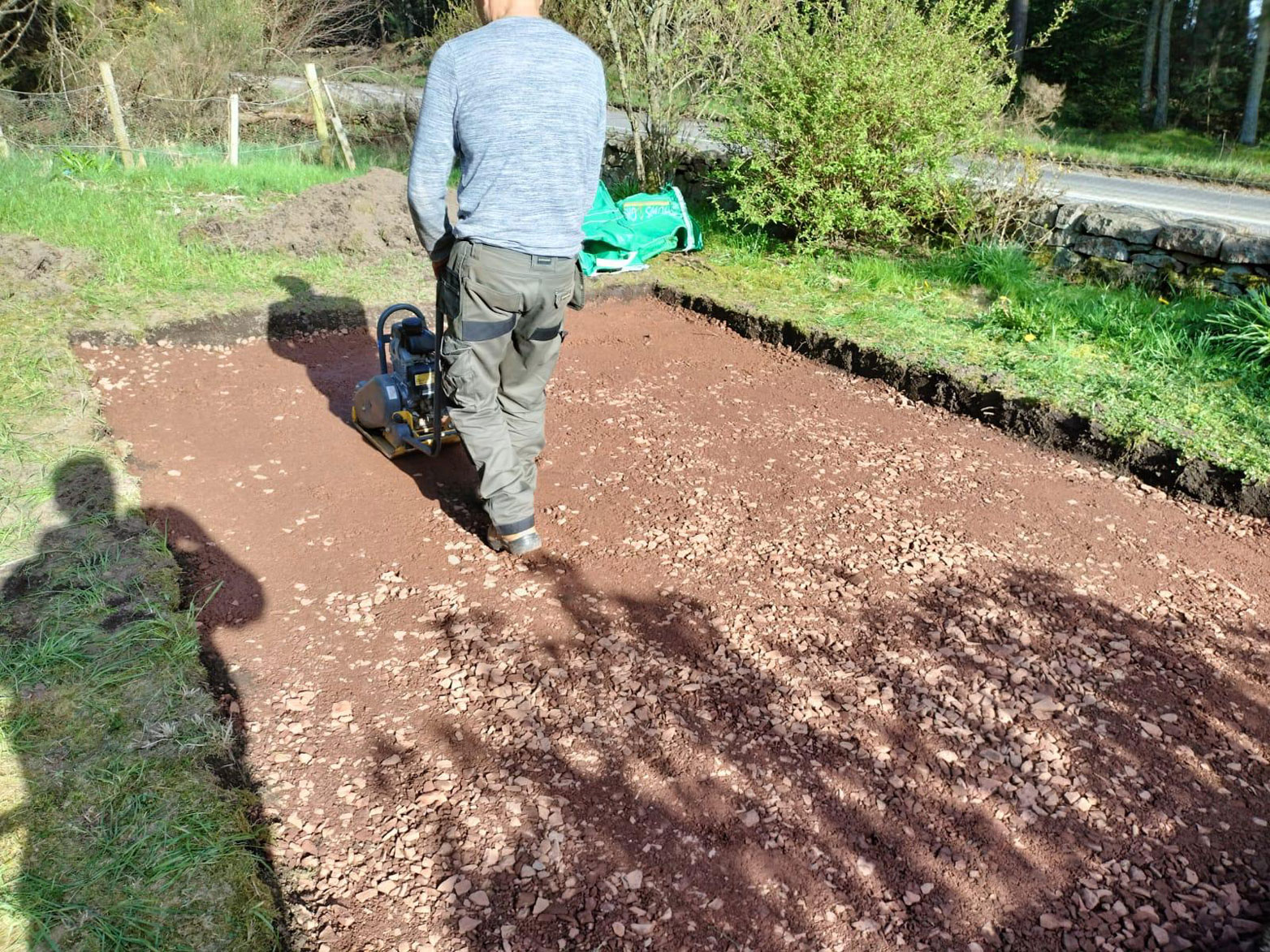
The usual choice is a well-compacted granular hardcore — MOT Type 1 is the standard for most garden buildings — laid and compacted in layers to give the slab a stable, free-draining foundation. The depth depends on your ground and the weight of the building, typically around 100–150mm. Getting the sub-base right matters more than most people realise: it's what stops the slab settling or cracking later, which is why we prepare and compact it properly as part of every install rather than leaving it to chance.
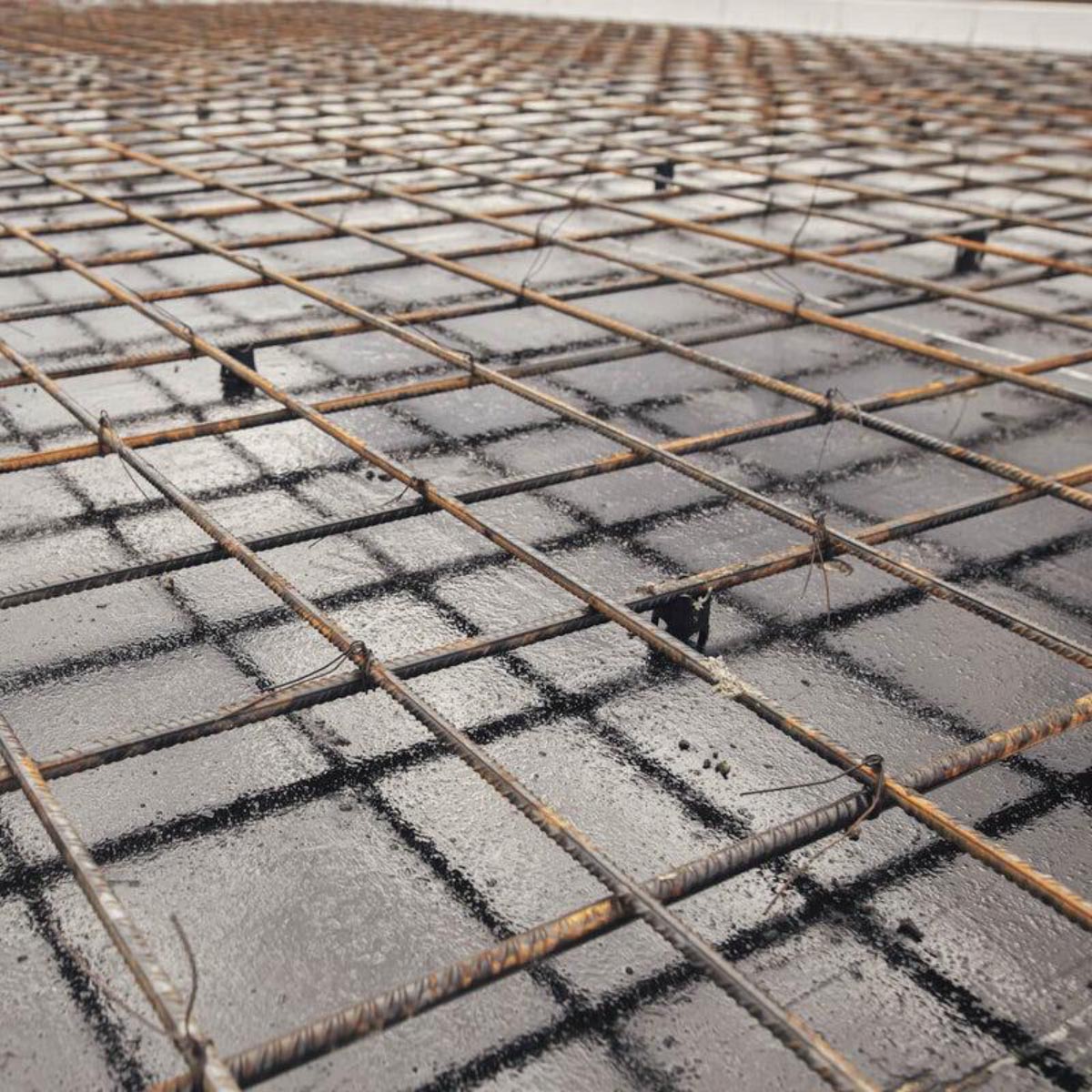
For anything beyond a light, small building we'd reinforce the concrete slab — it's what lets the base carry heavier, concentrated loads and resists cracking over time. Typically that means steel reinforcing mesh positioned within the slab, with heavier builds like garages or masonry outbuildings sometimes needing a thicker slab and heavier mesh again. The right specification depends on the size of your building, how you'll use it, and your ground conditions — which is exactly the sort of thing we work out for you when we quote, so the base is matched to the job rather than over- or under-built.
A properly built base — compacted sub-base, damp-proof membrane, and reinforcing mesh where needed — is designed to resist cracking and carry heavy loads for decades. Cutting corners on the groundwork is what causes problems, which is exactly why we don't.
Yes. A DPM under the slab stops moisture rising from the ground into the concrete and your building — it's essential for preventing damp, and we include it as standard.
To finish flush with the surrounding ground, you dig down by the total thickness of the base — that's the sub-base and the slab combined, not just one of them. As a rough guide, that means around 100–150mm of compacted hardcore plus the slab itself at around 100mm - 150mm, so you're usually excavating somewhere in the region of 200 – 300mm. The exact depth depends on your ground conditions and how you'll use the building, which is part of what we work out for you when we quote, so the finished base sits exactly where you want it.
Neither is "better" — they suit different jobs. Concrete wins on flat, accessible ground for heavy, permanent buildings and where you want a solid floor, and you do not mind the mess and excavation. Ground screws win on slopes, in tight access, and when you want speed with no mess. We're happy to advise on which fits your project.
No — a concrete base is permanent. That's a strength if you want something that will never move, but if you might relocate the building, a ground screw base can be removed and reused instead.
It depends on the size, thickness, and your ground conditions. We can install a concrete base within XXX distance from POSTCODE, with a minimum base size of XXX. A local builder will also be able to install a concrete base for you. Prices will depend on where you are in the country. Our prices typically start from £XX per square metre.
[CLIENT: confirm — what guarantee, if any, covers the concrete base and its groundwork.]
Speak to our team about your project today
Two concrete base projects
Getting a solid, level foundation into a real garden — without the excavation, mess, and delay that come with concrete. Here's how that plays out for two very different jobs.
A permanent garden room
The customer was investing in a garden room they intended to keep for good, so they wanted a foundation to match — something solid, permanent, and built to carry the weight without ever settling. With flat, accessible ground to work with, a reinforced concrete slab was the natural choice.
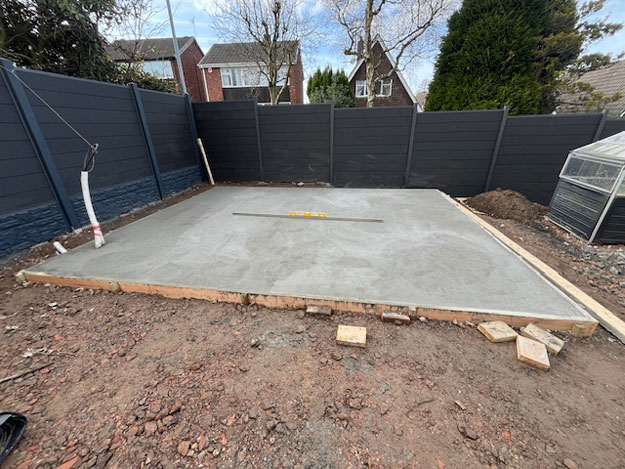
We prepared a compacted sub-base, laid the damp-proof membrane and reinforcement, and poured a level, square slab finished ready for the build. The result is an immovable foundation that will comfortably outlast the seasons — exactly the reassurance you want under a room you're treating as a permanent part of the home.
A hard-wearing workshop floor
This customer needed more than a base — they needed a floor. The plan was a workshop they'd use daily, wheeling equipment in and out and working on it directly, so the surface had to be tough, level, and easy to keep clean.
A concrete slab gave them exactly that: a hard, durable floor they could put straight to work, with no separate flooring needed on top. Months of heavy use later, it's held up without complaint — a proper working surface as much as a foundation.
Find the right foundation for your project
Tell us your base size and where it's going, and we'll send you a price.