
Eco-Plastic Base
A low-cost, eco-friendly base for lighter garden buildings on flat, firm ground. A recycled plastic grid you fill with gravel — simple, permeable, and quick to lay.
Best for:
Flat, firm ground
Budget-friendly
Lighter buildings — sheds, bike stores, greenhouses
Good drainage
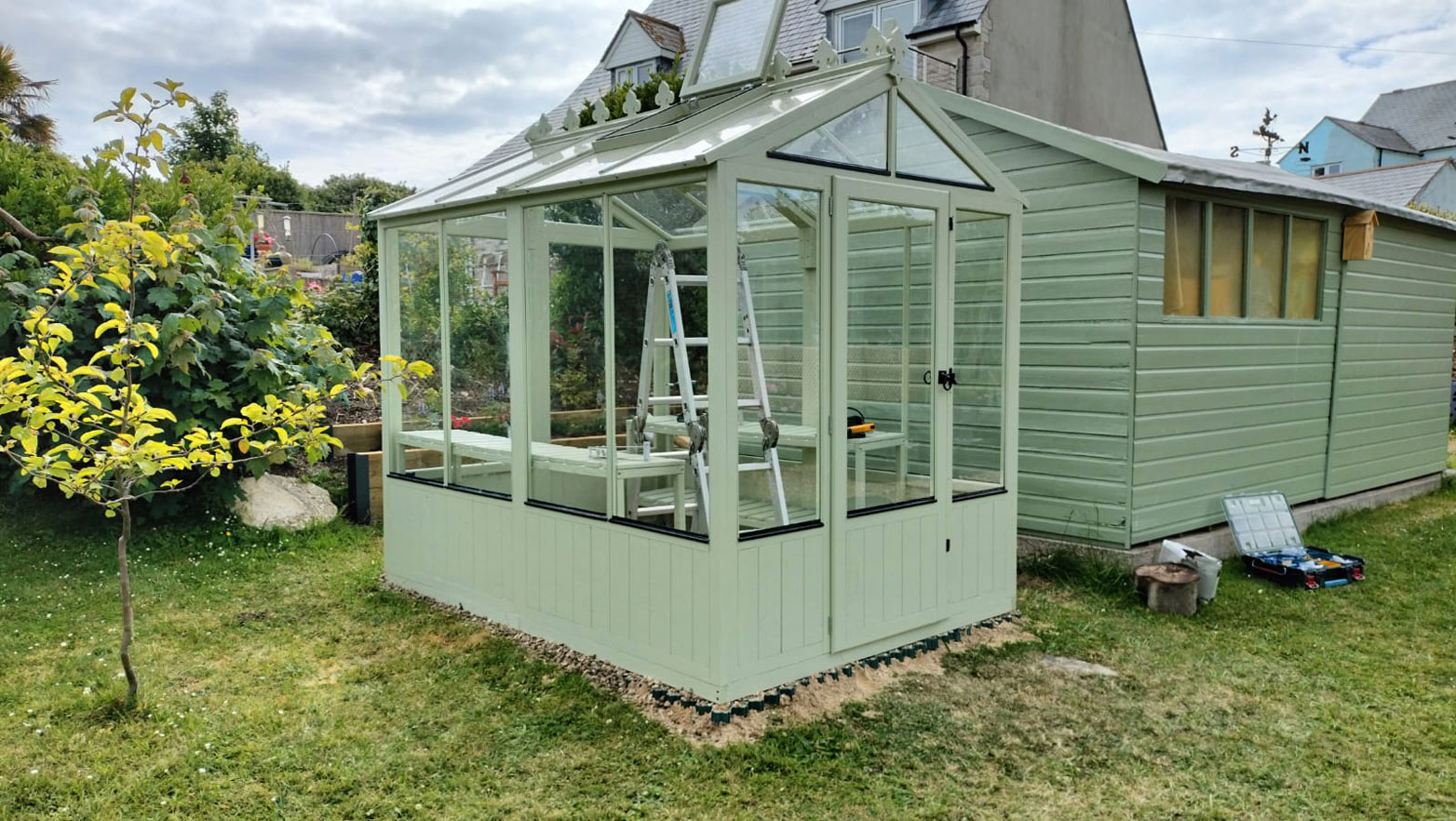
When an eco-plastic base makes sense
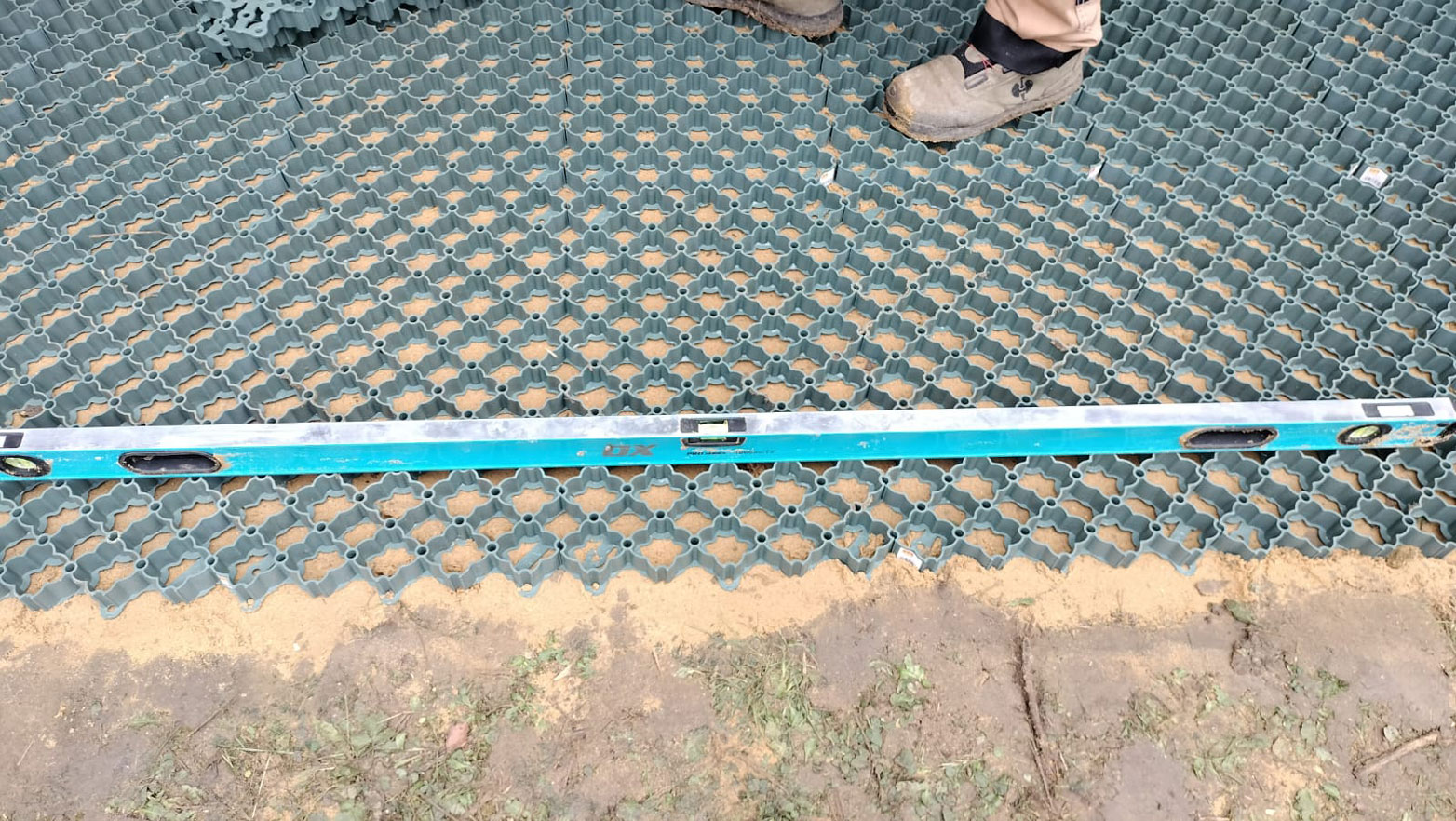
An eco-plastic base is an interlocking grid of recycled plastic cells that you lay on a prepared surface and fill with gravel. It's the simplest and often the cheapest of the four options — and on the right ground, for the right building, it does a genuinely good job.
Lighter buildings on flat, firm ground
It suits lighter buildings such as your typical garden sheds, bike and bin stores, greenhouses, and similar. Because the grid is permeable, rainwater drains straight through rather than pooling, which makes it a tidy, low-impact choice for a simple base. And as it's made from recycled plastic and needs no concrete, it's the most environmentally friendly option we offer.
View our some of our installations
How an eco-plastic base works
There's not much to it — which is rather the point.
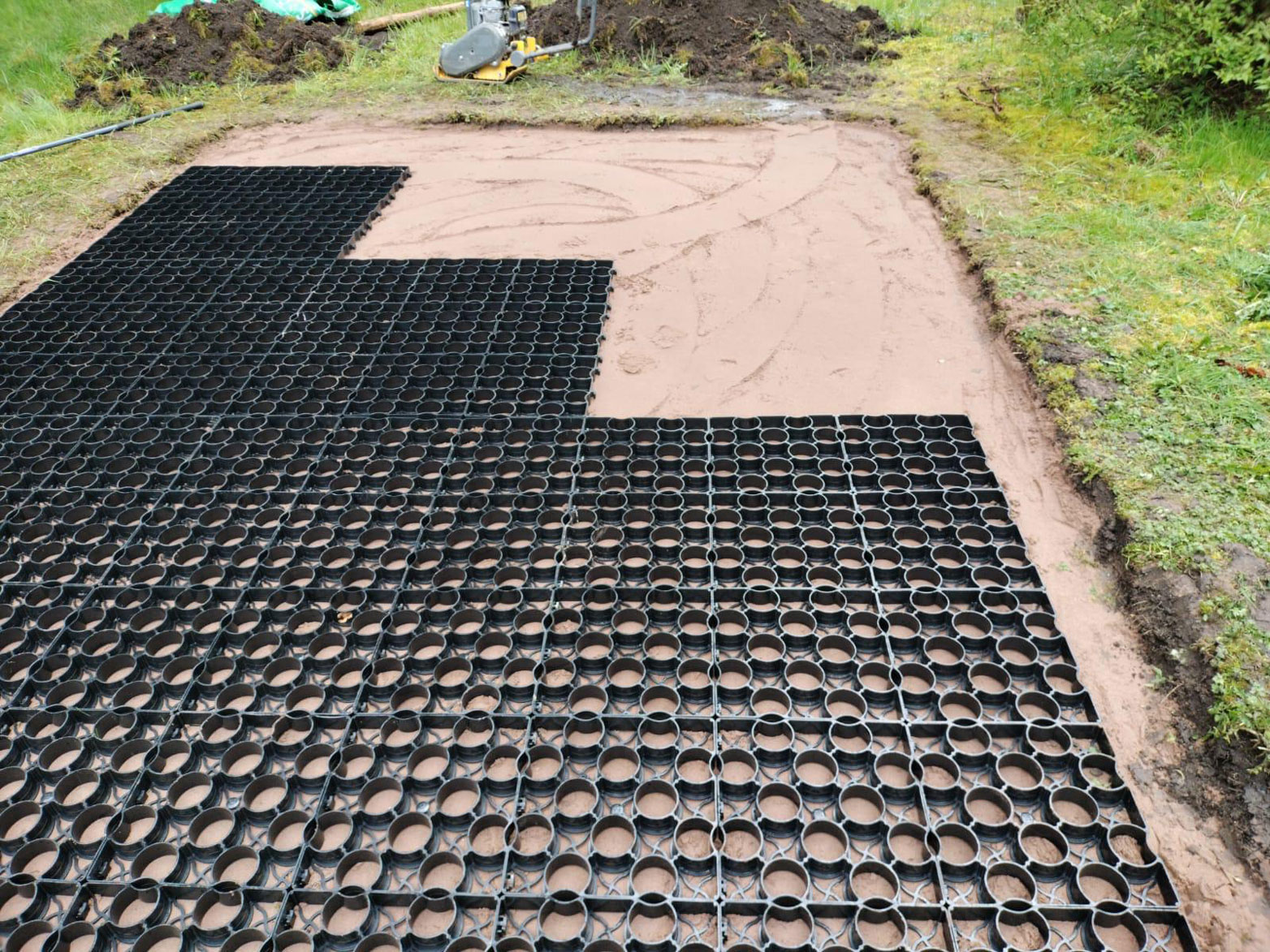
- Prepare the ground. The area is levelled and a sub-base laid so the grid sits flat and firm. [CLIENT: confirm your prep — e.g. membrane + compacted sub-base.]
- Lay the grid. The recycled-plastic cells interlock across the area to the size you need.
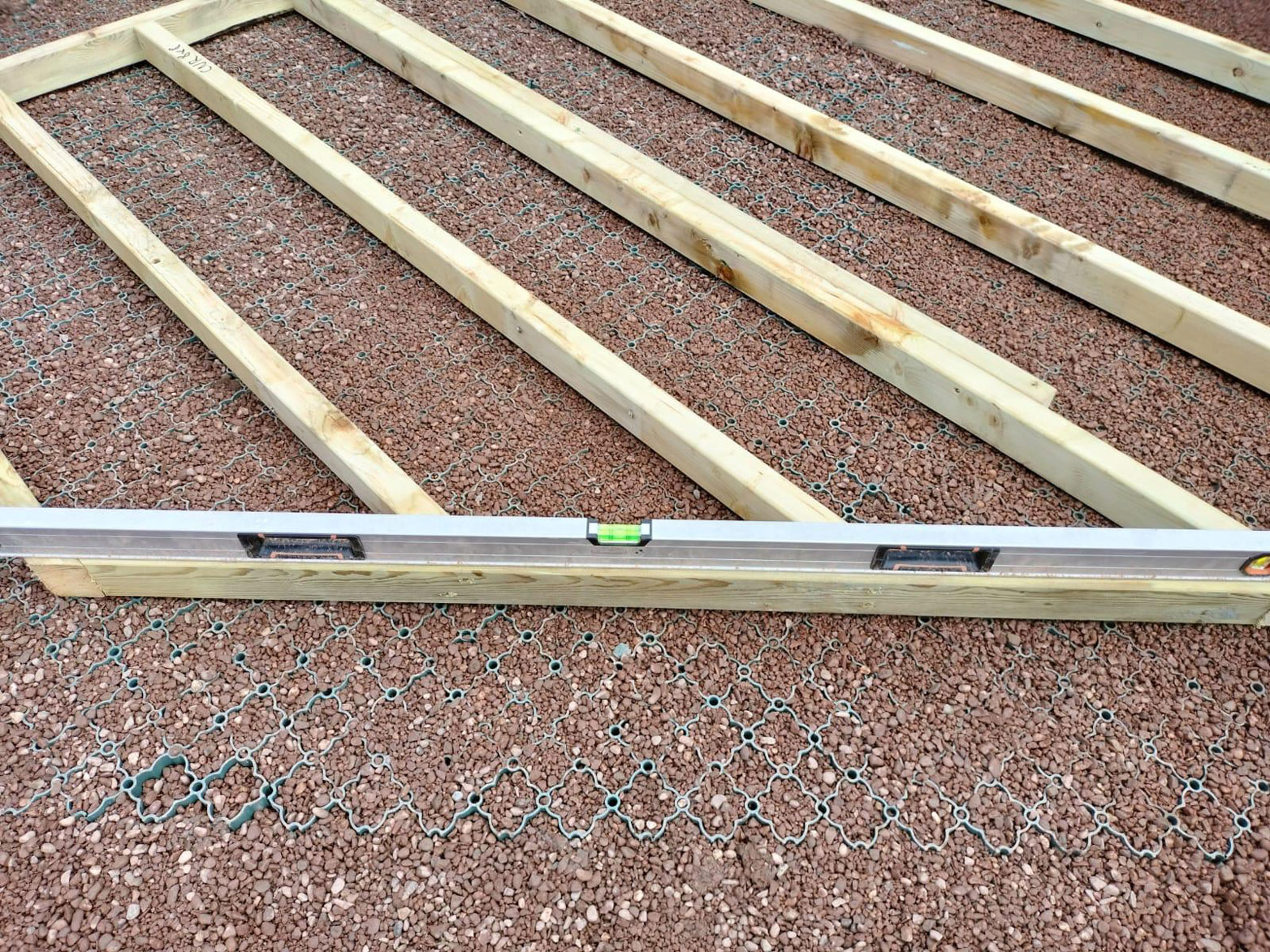
- Fill with gravel. The cells are filled to lock everything in place and give a stable, permeable surface for the building to sit on.
When an eco-plastic base isn't right
We install all four base types, so we'll tell you honestly when this one isn't the answer. We'd point you elsewhere if:
Your ground slopes or is uneven
An eco-plastic grid needs a flat, firm surface to work — it won't level a slope → Ground Screw Base
The building is heavy
For garden rooms, garages, or anything substantial, you need a foundation built to carry the weight → Ground Screw Base or Concrete Base
You're placing onto an uneven but solid existing patio or slab
Adjustable feet are quicker and cheaper than laying new concrete. → Adjustable Feet


Eco-Plastic Base FAQs
If we haven't managed to answer your questions here, please contact us with your enquiry.
Lighter buildings on flat, firm ground — sheds, bike and bin stores, greenhouses and similar. For heavier or larger buildings we'd recommend a ground screw or concrete base.
Yes — the ground needs levelling and preparing so the grid sits flat and stable.
No — it needs a flat, firm surface. On sloping or uneven ground, a ground screw base is the better choice as it adjusts to the slope.
It's made from recycled plastic and needs no concrete, so it's the lowest-impact of the base options we offer, and its permeable design lets rainwater drain naturally.
It's typically the most affordable option. Our eco-plastic base starts from £XX per square metre plus delivery
Yes. A DPM under the slab stops moisture rising from the ground into the concrete and your building — it's essential for preventing damp, and we include it as standard.
To finish flush with the surrounding ground, you dig down by the total thickness of the base — that's the sub-base and the slab combined, not just one of them. As a rough guide, that means around 100–150mm of compacted hardcore plus the slab itself at around 100mm - 150mm, so you're usually excavating somewhere in the region of 200 – 300mm. The exact depth depends on your ground conditions and how you'll use the building, which is part of what we work out for you when we quote, so the finished base sits exactly where you want it.
Neither is "better" — they suit different jobs. Concrete wins on flat, accessible ground for heavy, permanent buildings and where you want a solid floor, and you do not mind the mess and excavation. Ground screws win on slopes, in tight access, and when you want speed with no mess. We're happy to advise on which fits your project.
No — a concrete base is permanent. That's a strength if you want something that will never move, but if you might relocate the building, a ground screw base can be removed and reused instead.
It depends on the size, thickness, and your ground conditions. We can install a concrete base within XXX distance from POSTCODE, with a minimum base size of XXX. A local builder will also be able to install a concrete base for you. Prices will depend on where you are in the country. Our prices typically start from £XX per square metre.
[CLIENT: confirm — what guarantee, if any, covers the concrete base and its groundwork.]